開催概要
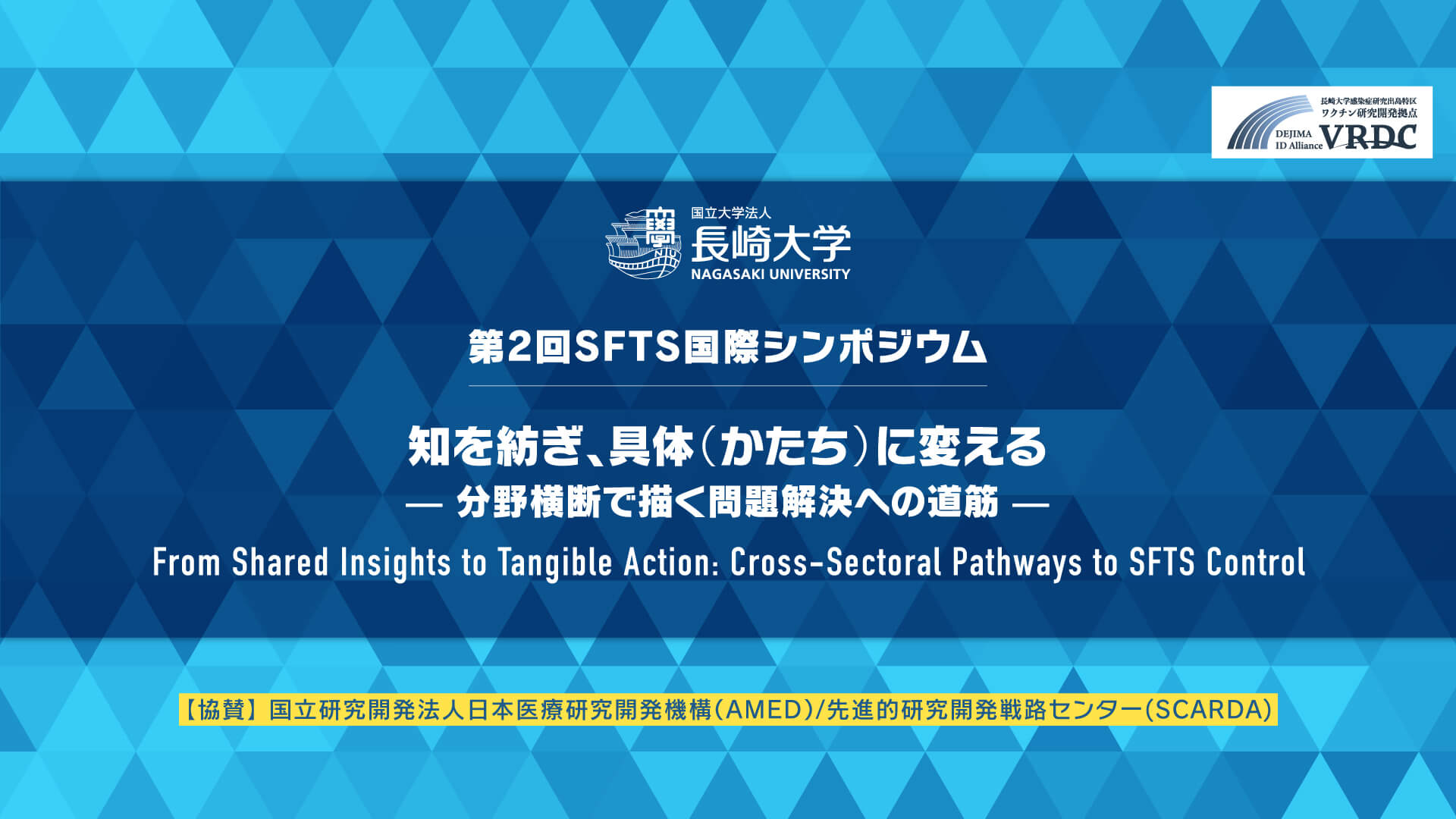
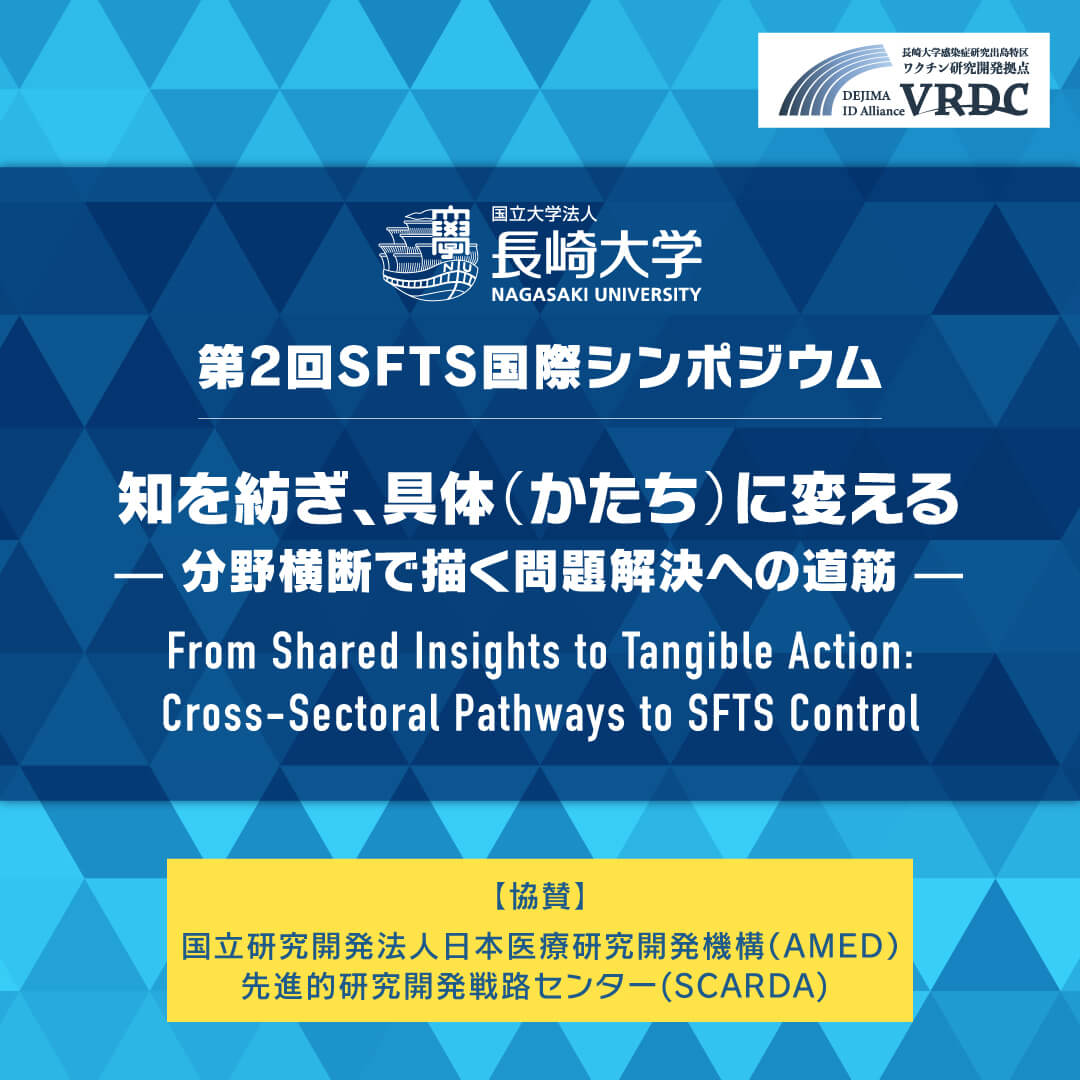
長崎大学熱帯医学研究所 感染症疫学・動態学分野は、この度、第2回重症熱性血小板減少症候群(SFTS)国際シンポジウムを開催いたします。
昨年開催された第1回シンポジウムでは、「国境を越えて未知に挑む」を掲げ、SFTSという新興人獣共通感染症に対し、国内外の専門家が結集して共同研究ネットワークの足掛かりを築きました。SFTSは、未だ確立されたワクチンや治療薬が乏しく、東アジア諸国において極めて高い致死率が報告されています。近年では、マダニを介した感染のみならず、伴侶動物や産業動物、野生動物を介したヒトへの感染経路が次々と明らかになり、その対策は喫緊の課題となっています。
第2回となる本シンポジウムでは、このネットワークをさらに推し進め、国内はもとより東南アジア諸国を含む地域へと対象を拡大し、アジア全域におけるSFTS対策の強靭化を図ります。長崎県という国内有数の流行地を拠点としつつ、気候変動や生態系の変化に伴うウイルス伝播リスクの変容を、より広域的な視点から議論いたします。
今回の最大の目的は、単なる知識の共有に留まらず、参加者の皆様と共に「優先的に取り組むべき研究課題」や「未だ光の当たっていない潜在的課題」を明確に定義することにあります。臨床医、獣医師、研究者、行政担当者、そして現場のステークホルダーがセクターの垣根を越えて対話し、ワンヘルスの観点から、次なる一歩に向けた具体的なアクションプランを構築することを目指します。
SFTSの脅威を制御し、ヒト・動物・環境のより良い健康を実現するための実効性あるロードマップを、ここ長崎から共に描き出しましょう。
背景
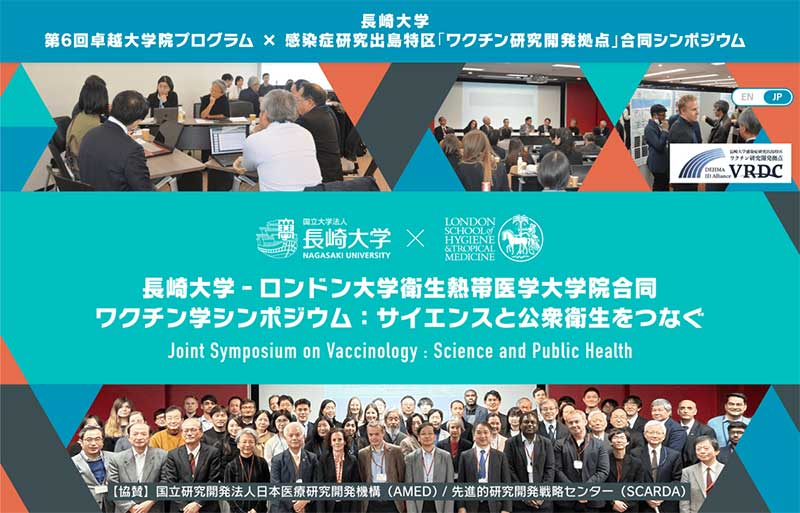
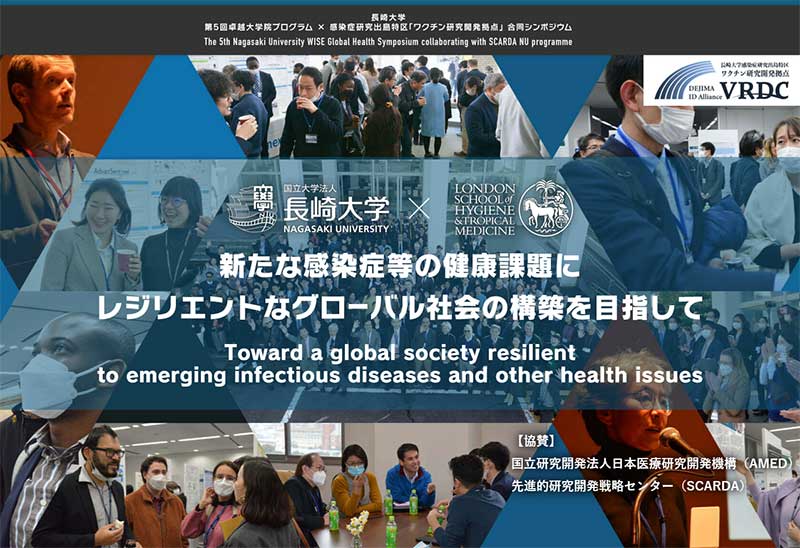
長崎大学は、ロンドン大学衛生・熱帯医学大学院(LSHTM)とのパートナーシップを通じて、グローバルヘルス領域において、両大学からの教員派遣・交流、教育資材や教育プログラムの共有と共同開発、日英を基軸とする多国籍共同研究を推進してきました。本シンポジウムは、2022年に「ワクチン開発のための世界トップレベル研究開発拠点の形成事業」の4つのシナジー拠点の一つとして採択された長崎大学感染症研究出島特区ワクチン研究開発拠点(VRDC)の活動の一環として企画されました。
日程・参加申込
第2回SFTS国際シンポジウム×長崎大学感染症研究出島特区「ワクチン研究開発拠点」プログラム
The 2nd SFTS International Symposium collaborating with SCARDA NU Programme
※シンポジウムはすべて英語で開催されます。同時通訳等の用意はありません。
2026年3月16日(月)・17日(火)
16 and 17 March 2026
公開・無料 / Open Sessions・Free
Day 1
| 12:30 – 13:00 | Registration |
|---|---|
| 13:00 – 13:15 | Welcome remarks |
| 13:15 – 14:45 | Session 1 – Update on global and national SFTS epidemiology |
| 14:45 – 15:00 | Coffee break |
| 15:00 – 16:30 | Session 2 – Opportunities and Challenges around Diagnostics |
| 16:30 – 18:00 | Session 3 – Therapeutics and vaccine development |
| 18:00 – 20:00 | Networking event |
Day 2
| 9:00 – 10:45 | Session 4 – Infectious diseases in context of climate and land use change |
|---|---|
| 10:45 – 11:10 | Coffee break |
| 11:10 – 12:00 | Session 5A – Risk groups and context |
| 12:00 – 13:20 | Session 5B – Towards controlling tick-borne disease – integration of technology, policy, and community engagement |
| 13:20 – 14:30 | Lunch |
| 14:30 – 18:00 | Session 6 – Working session – setting priorities for SFTS action in research and practice |
| 18:00 – 18:15 | Closing remark |
資料ダウンロード – Symposium Program (to be updated)
演者
Welcome remarks
- 森田公一 / 長崎大学
Session 1 – Update on global and national SFTS epidemiology
Session 2 – Opportunities and Challenges around Diagnostics
Session 3 – Therapeutics and vaccine development
Session 4 – Infectious diseases in context of climate and land use change
Session 5A – Risk groups and context
Session 5B – Towards controlling tick-borne disease – integration of technology, policy, and community engagement
Session 6 – Working session – Setting priorities for SFTS action in research and practice
Closing remarks
- TBD
short bio
シンポジウム会場
長崎大学
TMGH棟 1階