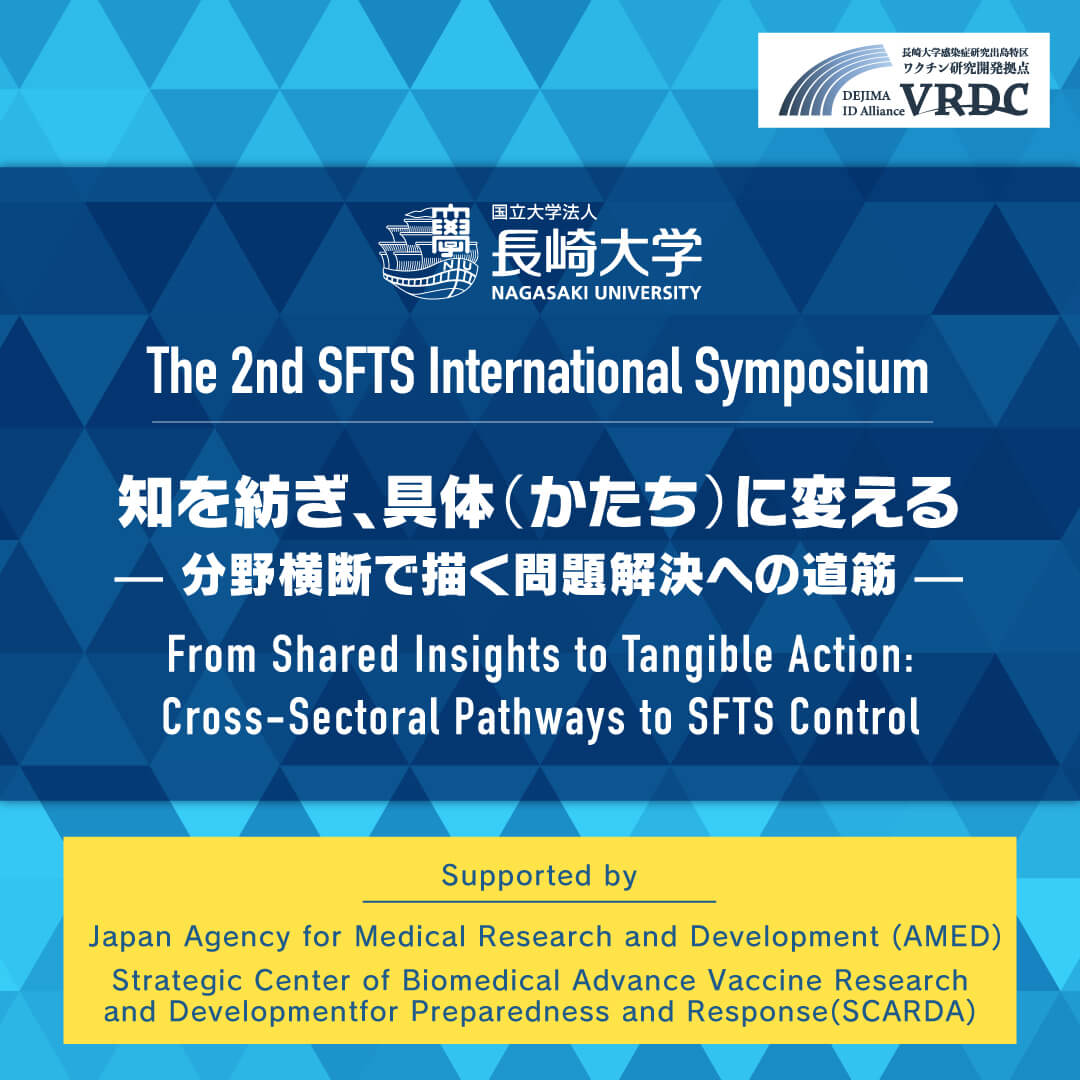
Event Overview
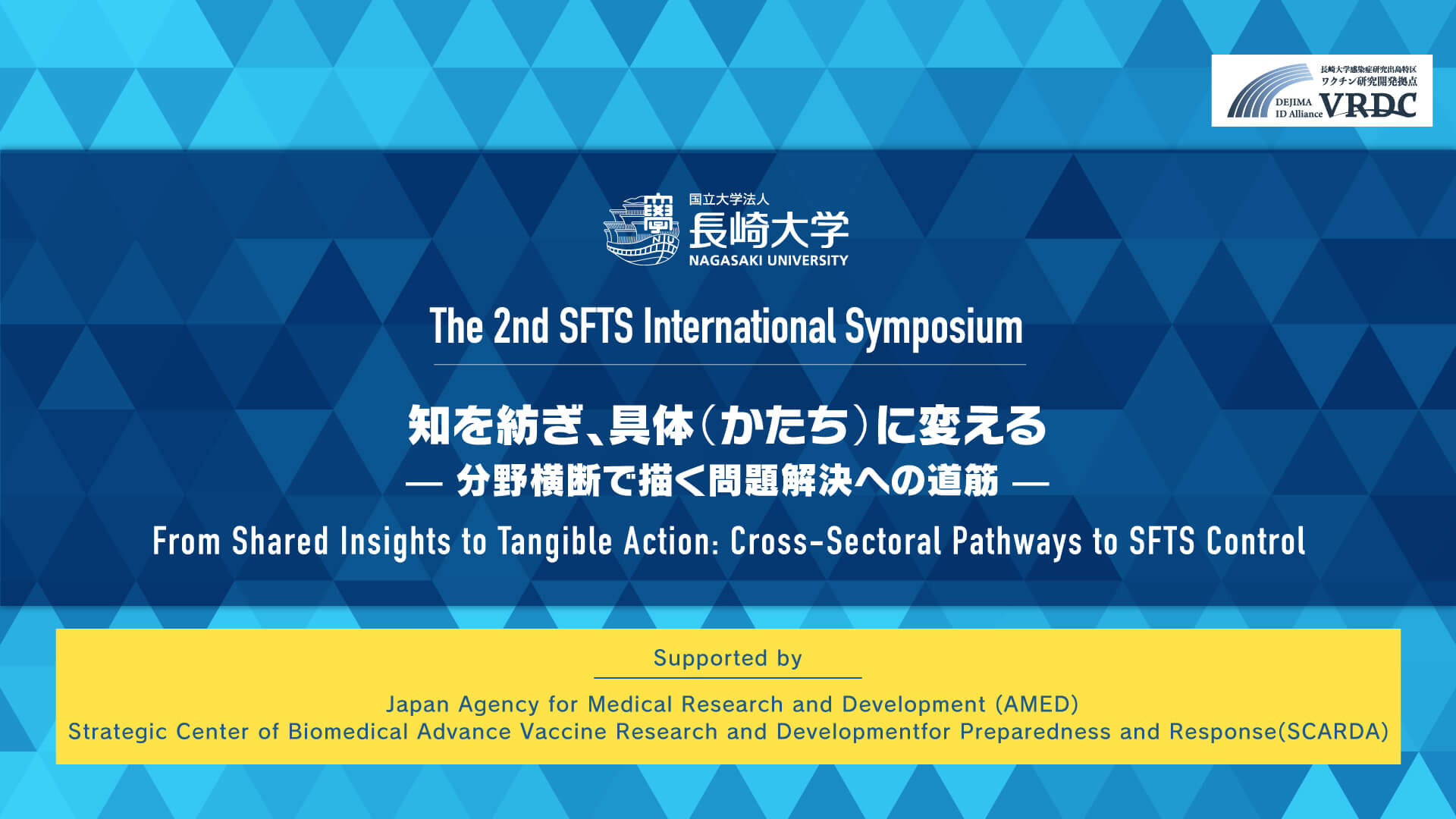
The Department of Infectious Disease Epidemiology and Dynamics at the Institute of Tropical Medicine (NEKKEN), Nagasaki University, is pleased to announce the 2nd International Symposium on Severe Fever with Thrombocytopenia Syndrome (SFTS).
At our inaugural symposium last year, themed “Crossing Borders to Confront the Unknown,” we brought together international experts to establish a collaborative research network to tackle SFTS—a relatively recently identified zoonosis. SFTS remains a critical public health threat in East Asia due to the lack of established vaccines and definitive treatments, coupled with high case fatality rates. Recent evidence has highlighted increasingly complex transmission dynamics involving not only ticks but also companion animals, livestock, and wildlife, necessitating an urgent and comprehensive response to clarify the reality of human infection through these diverse pathways.
Building upon the foundations laid last year, this second symposium aims to further broaden our horizon. We seek to expand our network beyond domestic borders to include Southeast Asia, strengthening the resilience of SFTS countermeasures across the entire Asian region. Leveraging Nagasaki Prefecture’s position as one of the most significant endemic areas in Japan, we will discuss the evolving risks of viral transmission in the context of climate change and ecological shifts from a broader regional perspective.
The primary objective of this year’s symposium is to move beyond the mere exchange of information. We aim to engage all participants in identifying “priority research agendas” and addressing “under-researched gaps.” By fostering direct dialogue among clinicians, veterinarians, researchers, policymakers, and frontline stakeholders, we will transcend sectoral boundaries to develop a concrete action plan based on the One Health approach.
Join us in Nagasaki as we weave together our collective expertise to shape the future of SFTS control and create a practical roadmap for the health of humans, animals, and our shared environment.
Background
Nagasaki prefecture has one of the largest SFTS human cases every year. This symposium in Nagasaki gathers SFTS specialists in a wide range of areas including medical doctors, veterinarians, researchers developing medicine and vaccination, policy makers, and groups at hightened exposure risk in one place. Through working together across borders and sectors with One Health perspective, we aim to develop a road map to achieve better health of humans, animals, and environment.
The Department of Infectious Disease Epidemiology and Dynamics is a newly established researh group in Nagasaki University, focusing to develop strategies to control infectious disease through epidemiological studies and mathematical modelling. We organize this symposium in collaboration with by Nagasaki university (School of Tropical Medicine and Global Health, DEJIMA Infectious Disease Research Alliance) and London School of Hygiene and Tropical Medicine (LSHTM), as part of our research activities in Strategic Center of Biomedical Advance Vaccine Research and Development for Preparedness and Response (SCARDA).
Event Schedule and Registration
The 2nd SFTS International Symposium collaborating with SCARDA NU Programme
*Please note that the symposium will be conducted entirely in English. Simultaneous interpretation will not be provided.
16 and 17 March 2026
Open Sessions・Free
Day 1
| 12:30 – 13:00 | Registration |
|---|---|
| 13:00 – 13:15 | Welcome remarks |
| 13:15 – 14:45 | Session 1 – Update on global and national SFTS epidemiology |
| 14:45 – 15:00 | Coffee break |
| 15:00 – 16:30 | Session 2 – Opportunities and Challenges around Diagnostics |
| 16:30 – 18:00 | Session 3 – Therapeutics and vaccine development |
| 18:00 – 20:00 | Networking event |
Day 2
| 9:00 – 10:45 | Session 4 – Infectious diseases in context of climate and land use change |
|---|---|
| 10:45 – 11:10 | Coffee break |
| 11:10 – 12:00 | Session 5A – Risk groups and context |
| 12:00 – 13:20 | Session 5B – Towards controlling tick-borne disease – integration of technology, policy, and community engagement |
| 13:20 – 14:30 | Lunch |
| 14:30 – 18:00 | Session 6 – Working session – setting priorities for SFTS action in research and practice |
| 18:00 – 18:15 | Closing remark |
Symposium Program (to be updated)
Speakers
Welcome remarks
- Kouichi Morita / Director, DEJIMA Infectious Disease Research Alliance (DIDA), Nagasaki University
Session 1 – Update on global and national SFTS epidemiology
Session 2 – Opportunities and Challenges around Diagnostics
Session 3 – Therapeutics and vaccine development
Session 4 – Infectious diseases in context of climate and land use change
Session 5A – Risk groups and context
Session 5B – Towards controlling tick-borne disease – integration of technology, policy, and community engagement
Session 6 – Working session – Setting priorities for SFTS action in research and practice
Closing remarks
- TBD
short bio
Symposium venue
TMGH Seminar Room 1F
Sakamoto Campus, Nagasaki University
1-12-4 Sakamoto, Nagasaki City, Nagasaki Prefecture, JAPAN 852-8523